Are you confused about calorie counting, servings sizes and
portion control? The Healthy Plate model might be just what you need to improve
your nutrition.
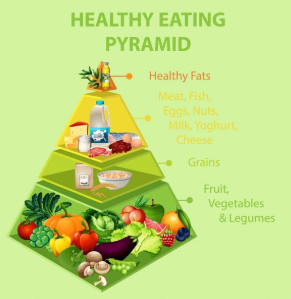
Back in the 1970s, the food pyramid was developed in Sweden
and was soon adopted in several countries as an approach to nutrition – eat
more of certain foods and less of others. The food pyramid was criticised as
being confusing which led to concept of using a plate as a visual guide of what
we should be eating. The idea was to depict our usual meal at dinner time with
no need to count the number of serves of food. Nutrition experts at Harvard
released their Healthy Plate model in 2011 and today it still serves as an
excellent guide on how to structure your meals.
How to build a healthy meal
1. Fill ½ your plate with vegetables
Aim for different colours and varieties of vegetables to
ensure you are getting maximum nutrient content. Add in some fruit if you would
like – or save your 2 pieces of fruit for morning tea and dessert. Have at
least one serving of leafy green vegetables every day. A serve of vegetables is
the amount you can hold in two open hands.
2. Fill ¼ of your plate with protein
Choose fish, chicken, tofu, Greek yogurt and pulses or beans
for your protein. Limit red meat to 3 serves a week and avoid processed meats
such as ham, bacon and salami. Make sure to cut all visible fat off the meat. A
serve of protein is generally the size of your palm.
3. Fill ¼ of your plate with carbohydrates
Eat wholegrain breads, rice and cereals instead of white
bread, white rice and white pasta which lack the fibre that is needed to for
gut health. Include starchy carbohydrates here e.g. potatoes and corn. A serve
of carbs is the size of your closed fist.
4. Include a small amount of healthy fat
Cook with olive oil. Avoid coconut oil, palm oil, butter and
ghee. Healthy fats include avocado, fish, nuts and seeds.
5. Drink water or milk
Not soft drink! Preferably nothing with added sugar.
Simple and flexible
Nutrition can be confusing. The healthy plate provides a
practical, easy-to-understand visual guide for everyday use. It is best used
for lunch and dinner as most of us do not eat these types of food at breakfast.
The model offers flexibility for taste preferences and intolerances and promotes
diversity of food which is essential for our gut microbiome. Many quick fix
nutrition meal plans are very prescriptive, do not take into account what food
you like and dislike and are usually restrictive – most people can only follow
a strict diet for several weeks then return to their old patterns of eating.
One of the benefits of this model is that it offers a long-term sustainable way
of eating.
What if you do not eat from a plate?
Maybe you love soups or curry in a bowl or you make your
family meals in the slow cooker before work. The model can be adapted no matter
whether you eat from a plate or bowl or share your food. If you are cooking a
one-pot meal simply follow the same principles. Make sure ½ of your ingredients
are vegetables and ¼ protein and ¼ carbohydrates. If you accompany your meal
with rice ensure the serving of rice is not too big – you should be having
double the amount of vegetables compared to rice. With practice you will find
portion control becomes easier.